

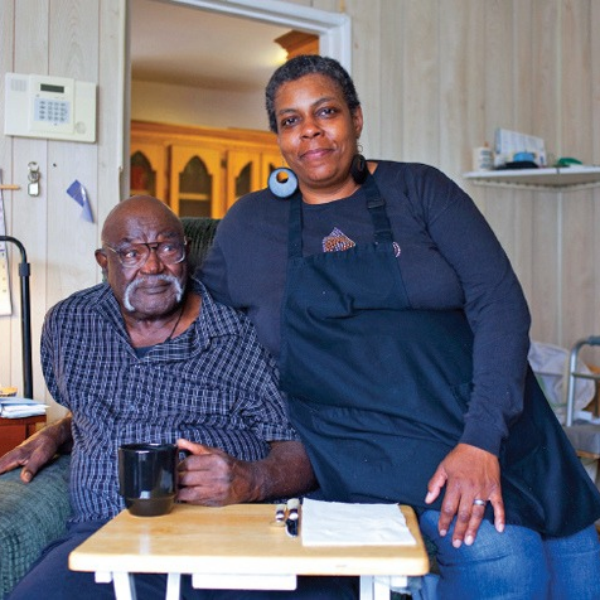

Most families want to be able to get aging and disability care at home for themselves or their loved ones when they need it. But wanting that care and being able to access and afford it are two different things.
Imagine this: A son stops by his mother’s home before work to help her move a piece of furniture and bring her breakfast. Between meetings, he calls to check in on her to make sure she’s eating lunch, and he schedules her next doctor’s appointment. After work, he picks up $600 worth of prescriptions, makes dinner, and cleans up her apartment – all before picking up his kids from school and heading home.
If this feels familiar, you’re not alone. What he’s providing is aging and disability care, making it possible for his mom to live and age at home. Millions of families across the country are living some version of this story, trying to provide more care while keeping up with work, rising expenses, and everything else life requires.
In this blog, we’ll break down what happens when the system fails to provide the home care families need and what could change to make that care easier to afford and access.
What Happens When Someone in a Family Needs More Care Than They Can Provide or Afford
Home care enables older adults and disabled people to live and age with dignity in their own homes and communities, with support from family caregivers and direct care workers.
But for millions of families, that care is unaffordable – and the cost affects the entire household, not just the person receiving care.
When home care isn’t available, older adults, disabled people, and their families are often left to make difficult choices. A family caregiver might reduce their hours at work, leave the workforce altogether, or take on caregiving responsibilities and out-of-pocket expenses without any financial support. If a family can’t provide that care themselves, they may have to pay more than $60,000 a year for 40 hours a week of care, move their loved one into a costly institution, or go without the support they need altogether.
The problem isn’t that families are unwilling to provide care – family caregivers and direct care workers already do what can feel like the impossible every day. The problem is that the systems around them don’t provide enough support or affordable options.
Families should be able to count on support when a loved one’s care needs become more than they can manage on their own. So how do we find ourselves in this situation in the first place?
The Growing Need for Aging and Disability Care
The challenge of finding affordable, accessible home care is becoming increasingly common. Seventy percent of older adults are expected to need long-term care at some point in their lives, and nearly 8 million covered by Medicare need home care today.
For many people, receiving care at home means more independence, staying connected to family and community, and living a life with dignity. But as the need for care grows and the costs rise, many families simply can’t keep pace.
Depending on the state that you live in, access to long-term care or home care, also known as home- and community-based services (HCBS) can vary significantly. And in states that haven’t prioritized investments in care, getting the care and support you need at home is even more difficult (see our 50-State Report Card that highlights the gaps in support options across states).
Our care system just isn’t working for millions of Americans seeking long-term care.
How Medicare and Medicaid Leave Gaps in Long-Term Care
Nearly 70 million older adults and disabled people are enrolled in Medicare, and many assume that it will cover their long-term care needs at home. In most cases, it doesn’t. Only Medicaid does (for a deeper look at how these programs differ, read our Medicare vs Medicaid explainer).
More than 600,000 people are currently on Medicaid waiting lists, and many have been waiting for years to receive the care they need. Last year’s Medicaid cuts and continued threats to funding are putting additional pressure on states and families. That could make it harder for people to receive care at home and lead to even longer wait times.
The Home- and Community-Based Services (HCBS) Access Act introduced in April would help close these gaps by making home care a guaranteed Medicaid benefit – clearing waiting lists and giving families more certainty.
How The Medicare at Home Act Could Help Families
The HCBS Access Act alone will not be enough to meet the growing demands for care. As more people go from being caregivers to needing it themselves, families will need a system that’s accessible, affordable, and reliable. Unfortunately, that’s not the system we have today.
That’s where the Medicare at Home Act comes in. The bill would create a new Medicare benefit offering up to 20 hours of home care per week for beneficiaries who need it – giving people more options to receive care in the place they call home, rather than relying entirely on family members, paying out of pocket, or moving into institutional care. For family caregivers, that could mean greater flexibility to stay in the workforce and get real relief.
The Medicare at Home Act would not solve every challenge families face on its own. Medicaid would still play an important role for older adults, people with disabilities, and caregivers with the least resources. That’s why this bill and the HCBS Act matter: Together they point toward a future with more access and more support for families.
A future with affordable, accessible care is possible. The real question is whether lawmakers will build a system that supports families in caring for one another, or continue to leave millions behind.
Additional resources:
- ASPE: What Is the Lifetime Risk of Needing and Receiving Long-Term Services and Supports?
- The Century Foundation: Care Matters: A 2026 State Report Card on Care Affordability and Access
- Caring Across Generations: Federal Cuts, State Choices, and the Future of Aging and Disability Care: Protecting Home and Community-Based Services for Older Adults, People with Disabilities, and Family Caregivers
- Caring Across Generations: What’s the Difference Between Medicare and Medicaid?
- The Hill: Americans want to age at home — Congress must help make it possible
- KFF: 10 Things to Know About Long-Term Services and Supports (LTSS)