Why Care Matters
Care is central to the affordability issue in the U.S. A brighter future for all families is possible, within reach, and necessary if we build out the care economy.


Close
Care is central to the affordability issue in the U.S. A brighter future for all families is possible, within reach, and necessary if we build out the care economy.

The care economy refers to the network of paid and unpaid work that supports people’s ability to live, learn, work, and age with dignity.
Why it matters:
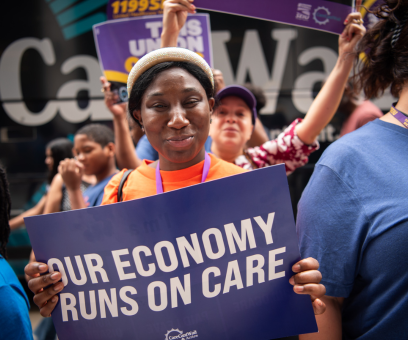
The care economy makes all other parts of the economy possible — it enables people to participate in the workforce, supports health and independence, and creates millions of jobs — yet it’s historically undervalued and underfunded.
Provide care for older adults and disabled people to live and age at home and in their community with support for family caregivers.
Guarantee that all families have child care that meets their needs, is free or within their budgets, and sustains a thriving workforce.
Make care jobs good jobs by ensuring family-sustaining wages and benefits with the ability to develop a career and form and join a union.
Create a permanent federal paid family and medical leave program so people can care for themselves and their loved ones without losing their job or income.
Ensure that all workers in the United States have access to paid sick leave when they need it to care for themselves and their loved ones.

“I support [a client] out of the very wages I am paid by Medicaid for my work. It is my choice, but I shouldn’t have to do this for the young man to get the help he needs. It is my prayer that our government works diligently to support the people with disabilities in our communities and their families. It is desperately important that the processes for funding, equipment, placement, and care be streamlined and that we recognize the value and appropriately pay those who work with people in need. It is through this that we will drastically improve the quality of care and quality of life of those with disabilities.”
“Being on Medicaid is transformative for Landry. Medicaid is what allows Landry to grow up in his community and with his loving family, instead of being in an institution, which is where a lot of kids with Down syndrome have ended up historically. We’re seeing that people with Down syndrome want to be active, contributing members of society when we provide them with the support they need. More opportunities for kids like Landry open up possibilities that we couldn’t even imagine ten years ago, like becoming a lawyer or legislator.”
“I have worked in the early childhood field for 6 years now. Three years ago I became a mother and I had to leave the program I worked for. I had to leave the families and children I formed strong relationships with, and leave the staff who relied on me. All because I could not afford the cost of child care on top of the cost of living with the wage I made at that program….Even now with discounted child care, it is our biggest expense and we still struggle financially.”
“In 1999, my Dad was diagnosed with lung cancer and needed radiation and chemotherapy. My mother was already suffering from Alzheimer’s Disease, unable to care for herself or for him…To help them, I had to leave my job temporarily and move to Maine. When I returned to work, I had no sick leave to use if I had become sick…Had I been a recent hire or working only part time, or if I had been sick myself, there would have been no paid leave available to me. I am grateful that I could be there for them when they most needed me. Everyone should be able to take the time they need when a family member needs them.”
A future where families’ decisions about care depend on what they want, rather than what they can afford, is within reach. This future depends on an economy that puts care first.
When care is prioritized, families are better supported, inequality shrinks, and democracy is stronger.


