Protect Medicaid

Last summer, Congress passed a budget that slashed more than $1 trillion from Medicaid, Medicare, and the Affordable Care Act. This was done by complicating access to care through work requirements and frequent eligibility redeterminations. Now, even before these policies are in full effect, we’re already seeing the repercussions.
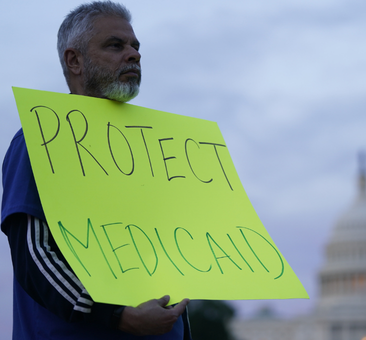
A man holds a bright yellow sign reading
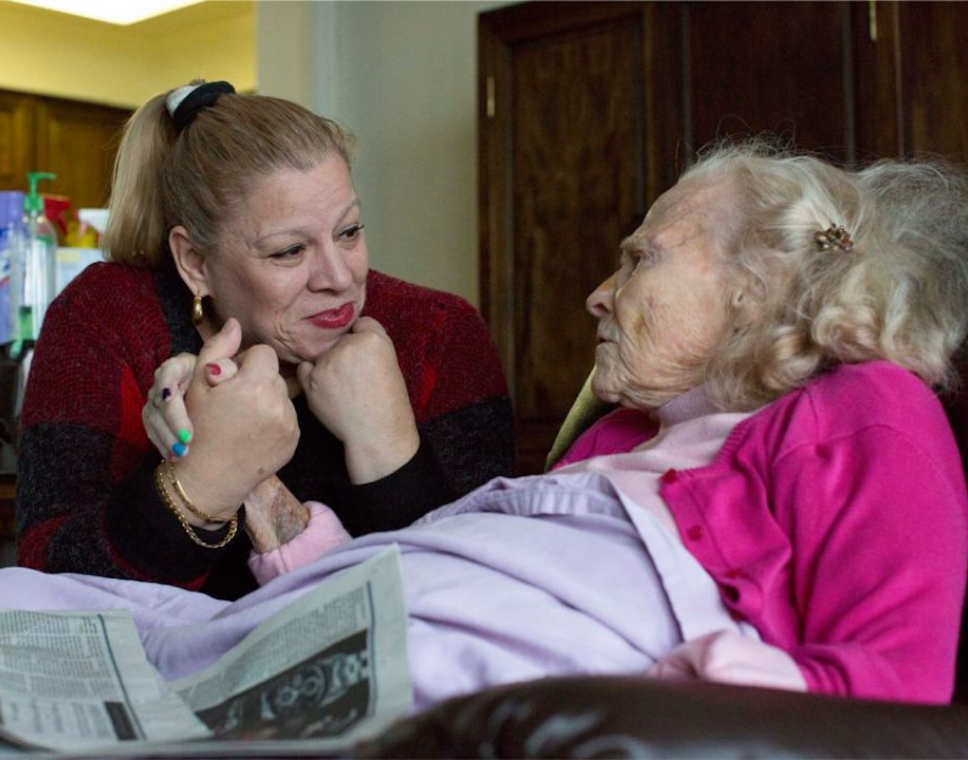
A woman holding an elderly woman's hand while in a nursing home.

What's Happening Now

By making devastating cuts to federal dollars for Medicaid, policymakers have shifted the burden to states – forcing painful budget decisions that leave communities across the country with fewer care options and less support.

How Medicaid Cuts Affect Our Communities:

Nine states and counting have already proposed massive cuts to Medicaid home and community-based services, risking the independence of older adults and people with disabilities. Medicaid funds nearly three-quarters of HCBS programs – helping 8.4 million older adults and people with disabilities live in their own homes. More than 600,000 people are already on waiting lists for these services. Cuts mean that the number will only grow, pushing more people into institutional care

More than 1 in 10 family caregivers rely on Medicaid for their own health coverage. Many also use home and community-based services (HCBS) programs to receive compensation for the essential care they provide. When these programs get cut, many caregivers have to leave their jobs or absorb the costs.

Cuts don’t just hurt the people receiving care – they hurt the people providing it. The direct care workforce shortage will worsen, as millions of home care workers – who are paid using Medicaid dollars – could see job losses or reduced wages. 37% of direct care workers rely on Medicaid for their own health coverage and 3 in 10 child care workers do too.

Over 750 providers face financial risk or closure, with over 300 rural hospitals at immediate risk. When these close, entire communities lose access to care and the jobs that come with it.

Unlike Medicare, which is a completely federally-run program, Medicaid is jointly funded by federal and state governments. Cuts at the federal level puts pressure on states, none of which have the funding to fill the gaping holes the absence of federal dollars would leave.

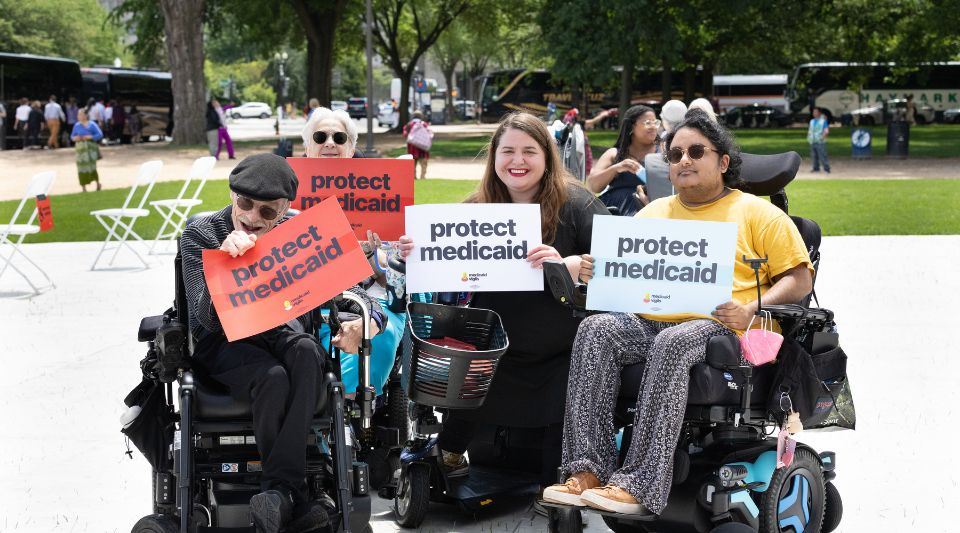
Four people in wheelchairs hold signs reading

People Are Fighting Back

From Nebraska to North Carolina, people just like you are fighting back – and winning.

  • In Nebraska, advocates stopped cuts to the Aged and Disabled Waiver that helps people live independently.
  • In Colorado, families testified and got caregiver cuts paused.
  • In North Carolina, public pressure forced the Governor to roll back reimbursement rate reductions for Medicaid service providers.

These wins prove one thing: when people organize together, decision-makers listen.

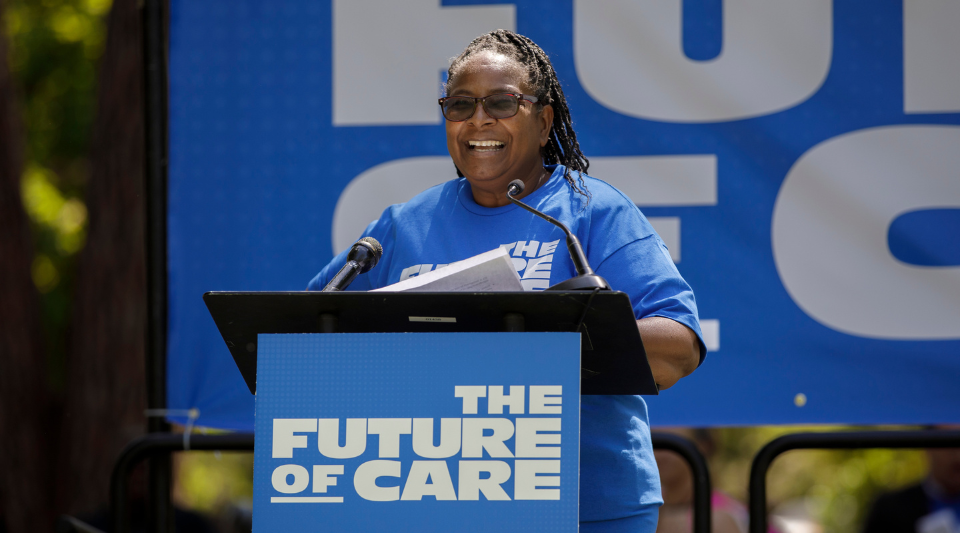
A woman at a podium speaking to a crowd.

How You Can Get Involved

Right now, governors and state policymakers are finalizing budgets that will shape what care looks like in your community for years to come. The decisions being made today will determine whether your neighbor can stay in their home, whether your family member gets the support they need, and whether care workers keep their jobs.

We’ve seen people across the country speak out and win. You can too, and we need you, your family, friends, and neighbors to act now.

A screenshot of an older woman with glasses smiling indoors, recording her Medicaid story.

Take the Next Step and Record Your Story

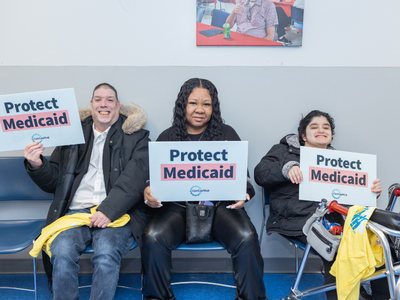
Three people sit on chairs, holding signs that say

Reach Out to Your Governor

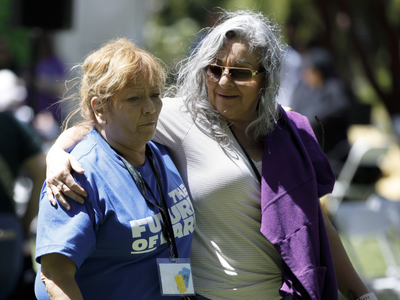
Two women embracing each other while attending a rally for care.

Tell Congress: Don't Weaponize Our Care